👶 Indoor Camera vs Baby Monitor – Why Parents Struggle With the Choice
Indoor camera vs baby monitor, it sounds like a simple choice, but for many parents it’s not. Both promise safety and peace of mind, yet they work in very different ways. And when your baby’s comfort and security are at stake, the decision can feel overwhelming.
Parents often ask: Should I pick an indoor camera with smart features, or a baby monitor made only for infants? The truth is, each option solves different problems. Indoor cameras offer sharp video and remote access. Baby monitors focus on baby-specific needs like cry alerts, lullabies, and secure connections.
The struggle comes down to trust. You want clear vision at night, reliable alerts, and protection against hacking. But you also need simplicity, portability, and confidence that the device won’t fail when you need it most.
This guide will break down the differences step by step, helping you choose the option that fits your family, without the stress.
🧩 Indoor Camera vs Baby Monitor: Core Differences Every Parent Should Know
Parents often think indoor cameras and baby monitors do the same job. But they’re built with different goals in mind. Knowing these differences helps you pick the right one for your baby’s needs.
Indoor Cameras
🔸 Built for home security first
🔸 Offer HD video, motion alerts, and remote access.
🔸 Work best for parents who want multipurpose use.
Baby Monitors
🔸 Designed only for infant care.
🔸 Provide cry alerts, lullabies, and temperature sensors.
🔸 Best for parents who want privacy, simplicity, and baby-focused features.
The choice depends on what matters most, flexibility and tech features, or peace of mind and child safety.
🛍️ Indoor Cameras for Baby Monitoring: Pros, Cons & Top Picks
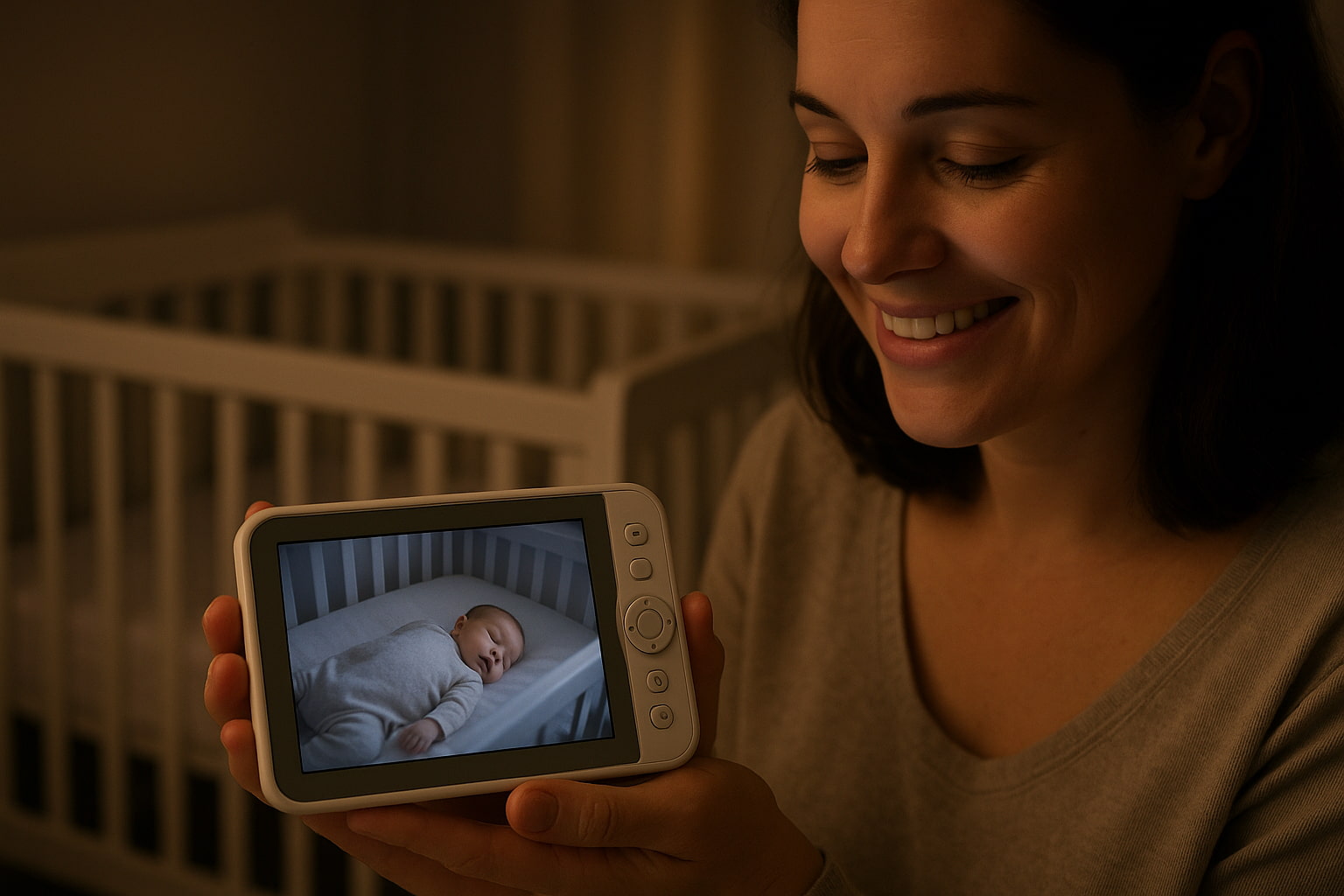
1. 📸 Blink Mini – Compact and Reliable Monitoring
The Blink Mini is a simple plug-in camera offering crisp 1080p HD video and two-way audio. It may be easily placed anywhere in the nursery due to its small size.
🍼 Why Parents Love It
✅ 1080p HD video with clear day and night vision
✅ Motion detection alerts directly to your phone
✅ Two-way audio lets you calm baby remotely
✅ Quick, no-fuss setup with Alexa integration
💡 Thinking About It?
Perfect for parents who want a budget-friendly, easy-to-use indoor camera without complicated features.
2. 🎥 Kasa EC70 – Smart Pan/Tilt Coverage
The Kasa Indoor Pan/Tilt Camera (EC70) provides 360° room coverage in 1080p HD. It’s designed for families who want flexible camera angles and reliable app controls.
🍼 Why Parents Love It
✅ 360° pan and tilt function for full room view
✅ Infrared night vision to monitor baby in the dark
✅ Motion and sound detection with app notifications
✅ Works with Alexa & Google Home for smart control
💡 Thinking About It?
Great for parents who want more viewing flexibility and smart home integration at an affordable price.
3. 📡 Ring Indoor Cam – Security Meets Baby Monitoring
The Ring Indoor Cam offers sharp 1080p video and motion alerts. It doubles as a home security device, giving parents added peace of mind beyond the nursery.
🍼 Why Parents Love It
✅ Small-space-friendly design that is easy to fit
✅ Live HD video with motion-activated alerts
✅ Two-way talk to soothe baby or speak to family
✅ Can link with Ring app and other security devices
💡 Thinking About It?
Ideal for parents who want a versatile camera that works for both baby monitoring and overall home security.
🛍️ Baby Monitors Built for Peace of Mind: What’s Worth Buying
1. 🎶 VTech VM819 – Simple and Reliable Baby Monitoring
The VTech VM819 Baby Monitor offers a secure, non-WiFi connection with a 2.8” screen for clear viewing. It’s designed for parents who want dependable monitoring without internet worries.
🍼 Why Parents Love It
✅ Long 19-hour battery life for all-day use
✅ Secure FHSS transmission with no WiFi needed
✅ Two-way talk to comfort baby from anywhere in the house
✅ Temperature sensor and lullabies for added nursery support
💡 Thinking About It?
Perfect for parents who want a straightforward, private monitor that just works.
2. 📺 HelloBaby No WiFi Baby Monitor – Big Screen Convenience
The HelloBaby Monitor comes with a 5” screen and 30-hour battery, making it a strong non-WiFi option. It combines long range and simple setup for peace of mind.
🍼 Why Parents Love It
✅ Large 5” display with pan-tilt-zoom camera
✅ Extended 30-hour battery life for longer monitoring
✅ VOX mode saves power while keeping you alert
✅ Two-way talk and lullabies for quick soothing
💡 Thinking About It?
Best for parents who want portability, strong range, and an easy-to-use monitor without WiFi.
3. 🌙 Nanit Pro Smart Baby Monitor – Advanced Insights for Parents
The Nanit Pro is a WiFi baby monitor that delivers 1080p video plus advanced sleep and breathing motion tracking. It’s made for families who want data-driven peace of mind.
🍼 Why Parents Love It
✅ 1080p HD video with crystal-clear night vision
✅ Tracks sleep patterns and provides insights via app
✅ Sensor-free breathing motion monitoring with included band
✅ Two-way audio and smart alerts for sound and movement
💡 Thinking About It?
Ideal for tech-savvy parents who want more than video, complete wellness insights and smart alerts.
🔒 Privacy & Safety Concerns Parents Worry About Most
When it comes to monitoring your baby, privacy is often the top concern. Wi-Fi indoor cameras send data over the internet, which makes them flexible but also more vulnerable. They rely on strong passwords and updates to stay safe. Without them, there’s always a risk of hacking.
Baby monitors with closed-loop systems, like FHSS or DECT, are far less exposed. They don’t depend on the internet and instead use private, secure signals. This makes them a trusted option for parents who value simplicity and safety.
🟢 Wi-Fi cameras = flexible access, higher risk if unsecured
🟢 Baby monitors = closed loop, harder to hack
🟢 Good habits (updates, strong passwords) are essential for both
👀 Concerned about hacking? Here’s How to Secure Your Smart Baby Monitor Like a Pro.
🌙 Night Vision & Low-Light Performance in the Nursery
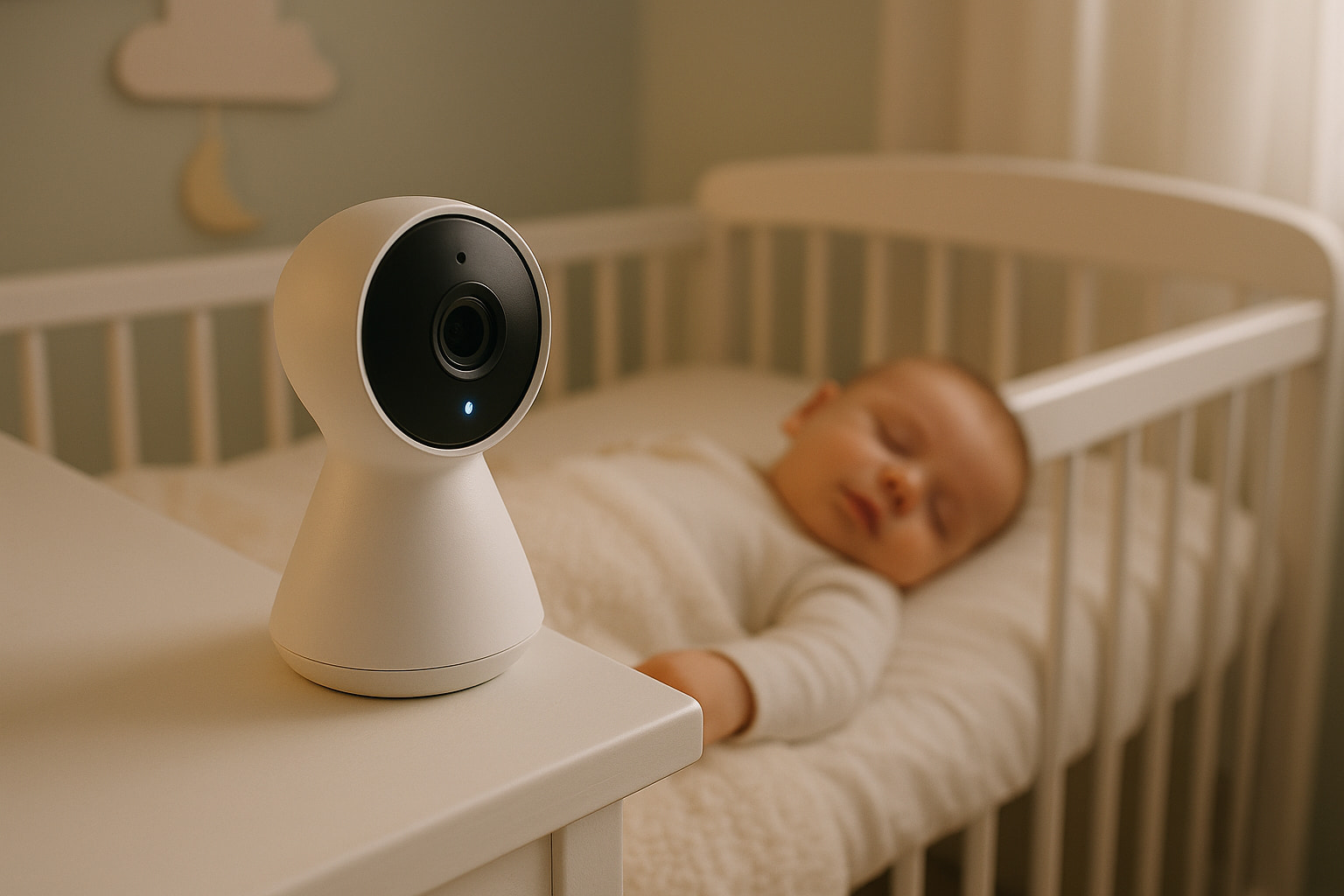
Nighttime is when parents rely on monitors the most. Indoor cameras often use infrared LEDs meant for wide spaces. In a small nursery, this can cause glare or overexposure. You may see a bright spot instead of your baby’s gentle features.
Baby monitors are tuned differently. Their infrared is softer and designed for close-range use. This makes faces, breathing, and small movements easier to see in the dark. For many parents, this extra clarity brings peace of mind.
🔸 Indoor cameras: wider infrared, sometimes too harsh for nurseries
🔸 Baby monitors: softer infrared, balanced for close viewing
🔸 Clearer detail often means safer sleep monitoring
🌙 Wondering if video is even necessary? Check our guide on Audio vs Video Baby Monitors.
📡 Connectivity & Reliability When It Really Matters
A reliable connection is what makes parents feel secure. Indoor cameras depend on Wi-Fi. This allows remote viewing, but if the internet drops, so does your access. Lag or buffering can also happen when the signal is weak.
Baby monitors, on the other hand, use direct radio frequencies like FHSS or DECT. These connections don’t rely on Wi-Fi and are less likely to cut out. For in-home monitoring, this often feels more stable and trustworthy.
✅ Indoor cameras: flexible access but Wi-Fi dependent
✅ Baby monitors: direct link, less chance of dropouts
✅ Reliability matters most during sleep or emergencies
📡 Curious about EMF safety? See our breakdown of EMF radiation in baby monitors.
⚙️ Smart Features vs Simple Setup: What Parents Actually Use
Indoor cameras often shine with high-tech extras. Many include cloud storage, app notifications, and integration with Alexa or Google Home. These features are powerful, but they also add setup steps and sometimes monthly costs.
Baby monitors focus on simpler, baby-centered tools. Features like sleep tracking, temperature alerts, and even breathing monitors are built in. They don’t usually need Wi-Fi or cloud accounts to work.
🔹 Indoor cameras: app control, cloud storage, smart home pairing
🔹 Baby monitors: sleep and breathing tracking, quick setup
🔹 Parents often value ease and baby-focused features over extras
👀 Need expert picks for breathing monitors? See our list of 4 Trusted Baby Monitors with Breathing Monitor Picks.
🧳 Portability & Travel: Which Option Fits Busy Families Best?
Busy families often need monitors that move with them. Indoor cameras are usually tied to Wi-Fi. This makes them harder to use outside the home or when traveling. They also need outlets for power, limiting where you can place them.
Baby monitors, on the other hand, are built with flexibility in mind. Many run on rechargeable batteries, so they can be moved from room to room or even taken on trips. Range and portability make them more travel-friendly.
✅ Indoor cameras: need Wi-Fi, less portable
✅ Baby monitors: battery-powered, easy to move
✅ Great for families who travel or shift rooms often
💰 Cost & Long-Term Value: Which One Saves You More?
Parents often think about not just the upfront cost, but the long-term value. Indoor cameras may seem affordable, but many depend on subscriptions for cloud storage or advanced features. Over time, those monthly fees can add up.
Baby monitors usually work as a one-time investment. All features are available right away, and they don’t require any subscriptions. This makes them easier to budget for in the long run.
🔹 Indoor cameras: possible monthly subscription fees
🔹 Baby monitors: one-time use, no ongoing costs
🔹 Long-term value depends on whether you need cloud storage or prefer simple
📌 Did You Know?
According to a 2020 investigation by the UK’s National Cyber Security Centre (NCSC), many smart cameras and baby monitors come with default or easily guessable passwords, like “admin” or “00000.” Cybersecurity experts warn that unless these default credentials are changed and firmware is kept up to date, users risk being watched without their consent.
🏁 Final Verdict – Indoor Camera vs Baby Monitor: What Should Parents Choose?
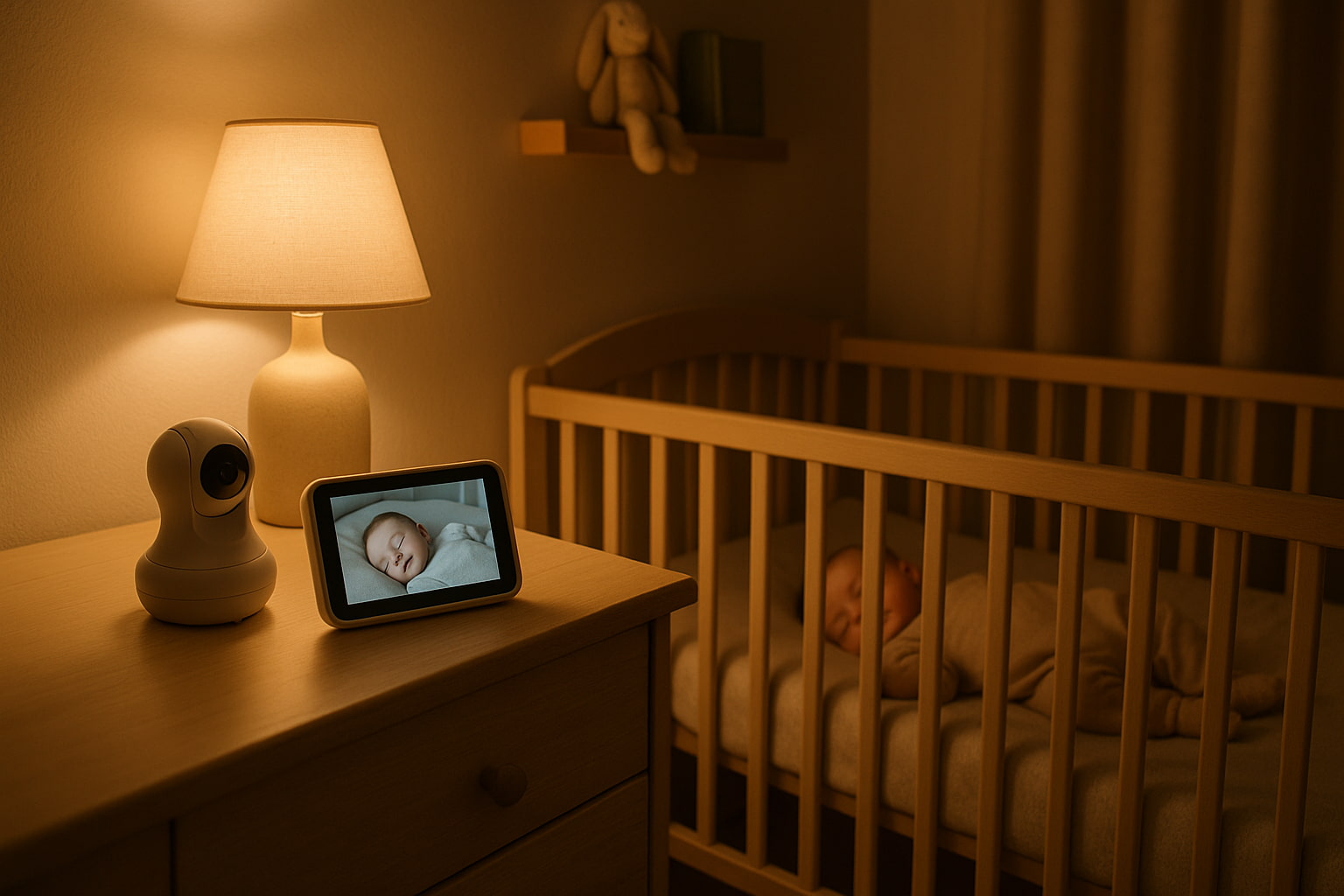
Choosing between an indoor camera and a baby monitor is not simple. Both give peace of mind, but they solve different problems. That’s why so many parents struggle with the decision.
Indoor cameras offer flexibility. You can check in from work, track motion, and even use them later as home security. But this comes with risks. Wi-Fi can drop. Security needs your attention. And sometimes, the features feel more than what you really need.
Baby monitors, on the other hand, are made only for one job, keeping your baby safe. They don’t need apps or updates. The connection is private, and the alerts are designed with babies in mind. For many parents, this simplicity feels like real safety.
The truth is, the “best” choice depends on your family. If you want tech and remote viewing, go with an indoor camera. If you want privacy, ease, and baby-focused features, a baby monitor may be the better fit.
🧾 Quick Picks for Parents in 2025
Choosing between indoor cameras and baby monitors doesn’t have to be hard. Here’s a snapshot of the best options, each with one key feature that sets it apart:
🔹 Blink Mini – Compact size with 1080p HD clarity
🔹 Kasa EC70 – Pan/Tilt camera with full-room coverage
🔹 Ring Indoor Cam – features motion alerts and doubles as security
🔹 VTech VM819 – Long battery life and secure no-WiFi link
🔹 HelloBaby Monitor – Large 5” screen with pan-tilt-zoom
🔹 Nanit Pro – Smart sleep and breathing insights
👉 Check today’s top deals and pick the one that fits your family best.
⚠️ Affiliate Disclaimer
This post contains affiliate links. If you purchase through these links, we may earn a small commission at no extra cost to you. We only recommend products we genuinely trust and believe will benefit our readers.
✍️ By Find For Baby
We’re a team of parents and safety testers dedicated to helping families choose smart, safe, and stress-free baby gear. Every guide we publish is researched with care to give you honest advice you can trust.