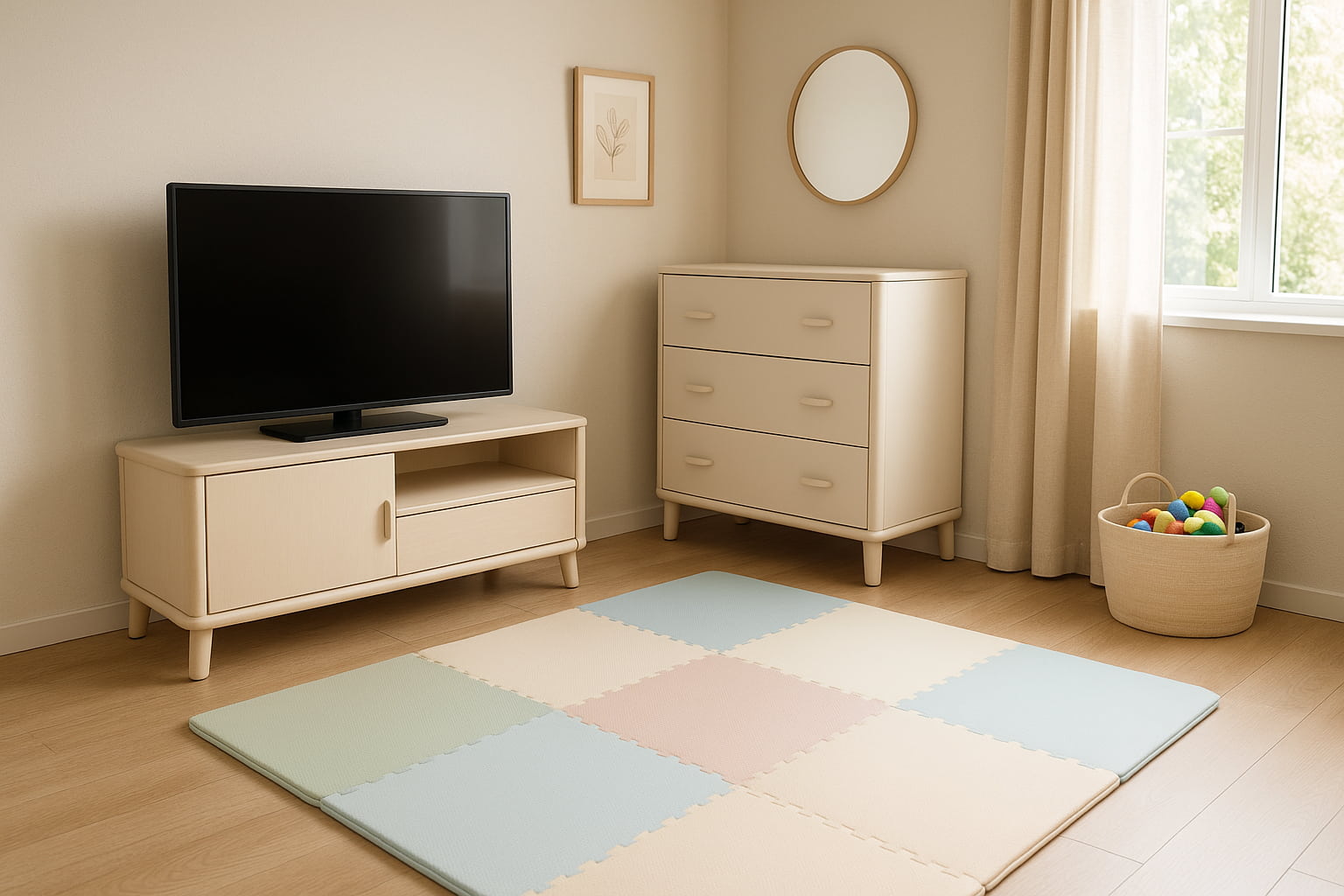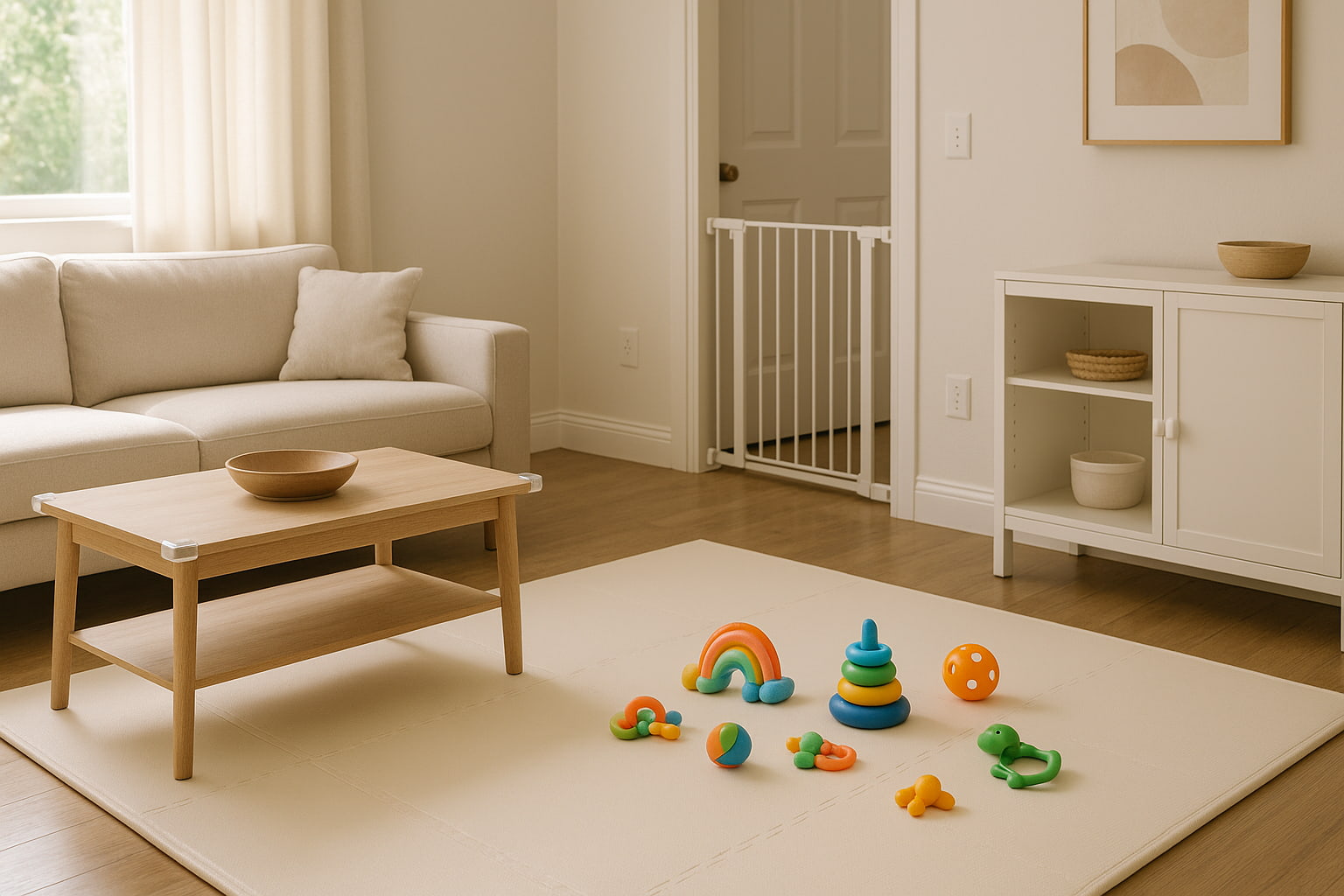
🏠 Why Babyproofing Your Living Room Matters More Than You Think
Babyproofing your living room is one of the most important steps you can take as a parent. This is the space where your baby will spend a lot of time, crawling, playing, and exploring.
But there may be many hidden hazards in the living room. Heavy furniture can tip over. Sharp corners can cause injury. Loose cords, outlets, and small objects can all put your child at risk.
Every year, the U.S. Consumer Product Safety Commission reports many events caused by risks in living rooms and household furniture. The majority of these incidents occur in a matter of seconds, even while parents are around.
The good news? With a few smart changes, you can make your living room both safe and inviting. In this guide, you’ll find simple steps that protect your baby while keeping your space comfortable for the whole family.
🪑 Identifying the Hidden Hazards in Your Living Room
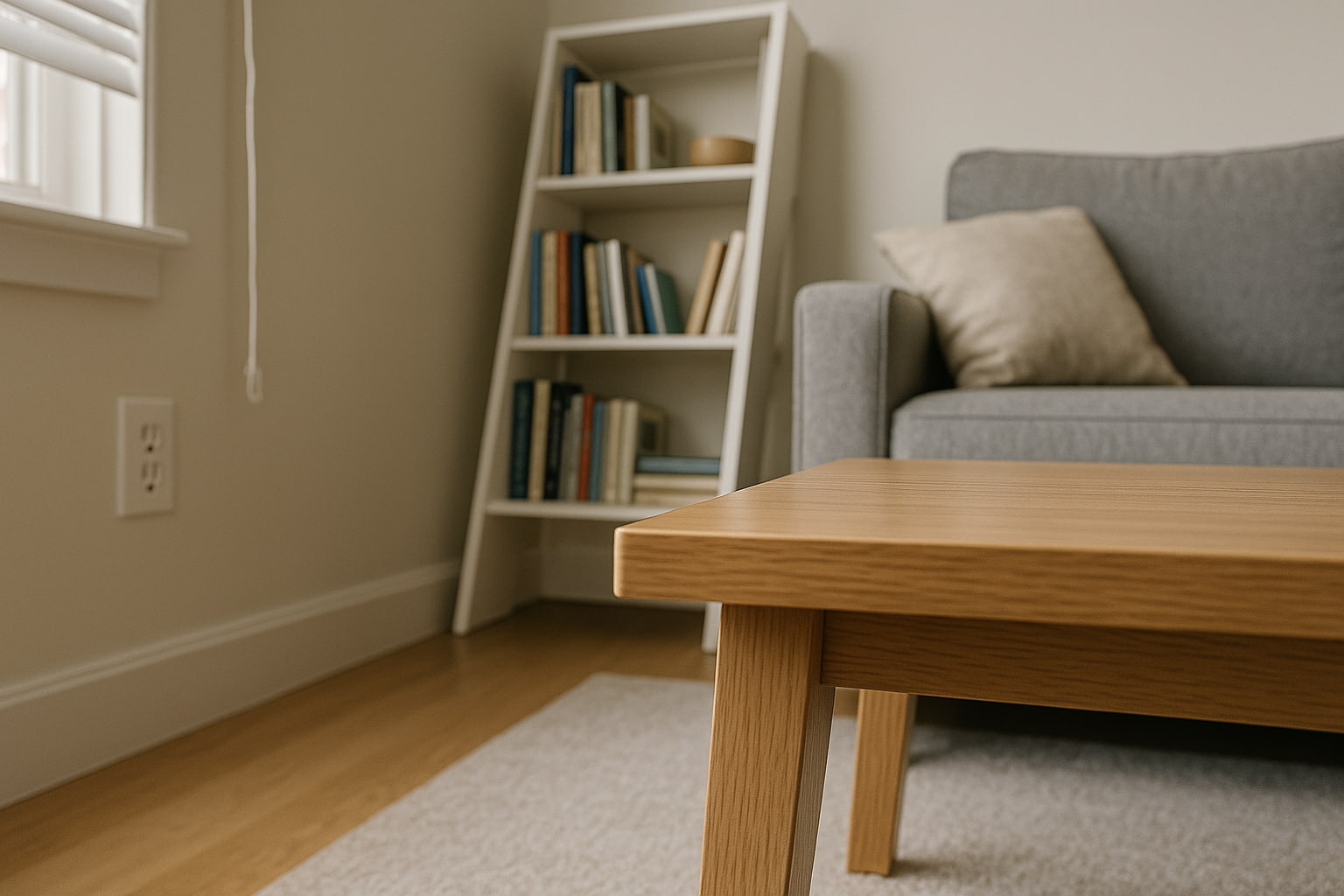
Not all dangers in your living room are easy to spot.
Some are hidden in plain sight.
Sharp corners on coffee tables or TV stands can cause serious bumps. Unstable furniture, like lightweight bookshelves, can tip over if a baby tries to climb them.
Cords from blinds or electronics can become choking or strangulation hazards. Glass tables may break if knocked into. Fireplaces add burn risks, even when not in use.
Childproofing means looking beyond the obvious. Walk through your living room from your baby’s eye level. You’ll notice hazards you might miss from above.
Every hidden risk you remove makes your home a safer place to explore.
🛋️ Want a full guide on anchoring? Read How to Anchor Furniture for Baby Safety – Tips That Prevent Most Injuries
📏 Securing Heavy & Freestanding Furniture Before It Tips
Heavy furniture can be a major tipping hazard.
Dressers, bookshelves, and TV stands are the most common culprits.
Anchoring these pieces keeps them stable, even if a child climbs or pulls on them.
You can use two main tools:
✔ Wall Anchors – Screwed into studs for maximum strength.
✔ Anti-Tip Straps – Adjustable straps that attach furniture to the wall.
Wall anchors are great for heavy, permanent setups. Anti-tip straps work well for flexibility or when moving furniture later.
Both options can prevent dangerous tip-overs.
The safest homes often use a mix of both methods for full coverage.
📊 Fact Box
According to the U.S. Consumer Product Safety Commission (CPSC), tip-over accidents send thousands of children to the ER each year. This risk can be lowered by up to 70% by anchoring furniture.
🪵 Soften Sharp Corners and Edges for Safer Play
Sharp corners and hard edges can cause nasty bumps.
They’re often found on coffee tables, TV stands, and shelves.
Adding protection makes the living room safer for babies and toddlers.
✔ Corner Guards – Great for wood and glass tables. They stick on easily and blend in.
✔ Edge Bumpers – Long strips that cover sharp sides on shelves or benches.
✔ Soft Play Mats – Cushion falls around low furniture and play zones.
For glass furniture, clear silicone corner guards work best.
For wooden pieces, foam or rubber guards give better impact protection.
These small changes can prevent serious injuries during active play.
📺 Babyproofing Your TV Area the Right Way
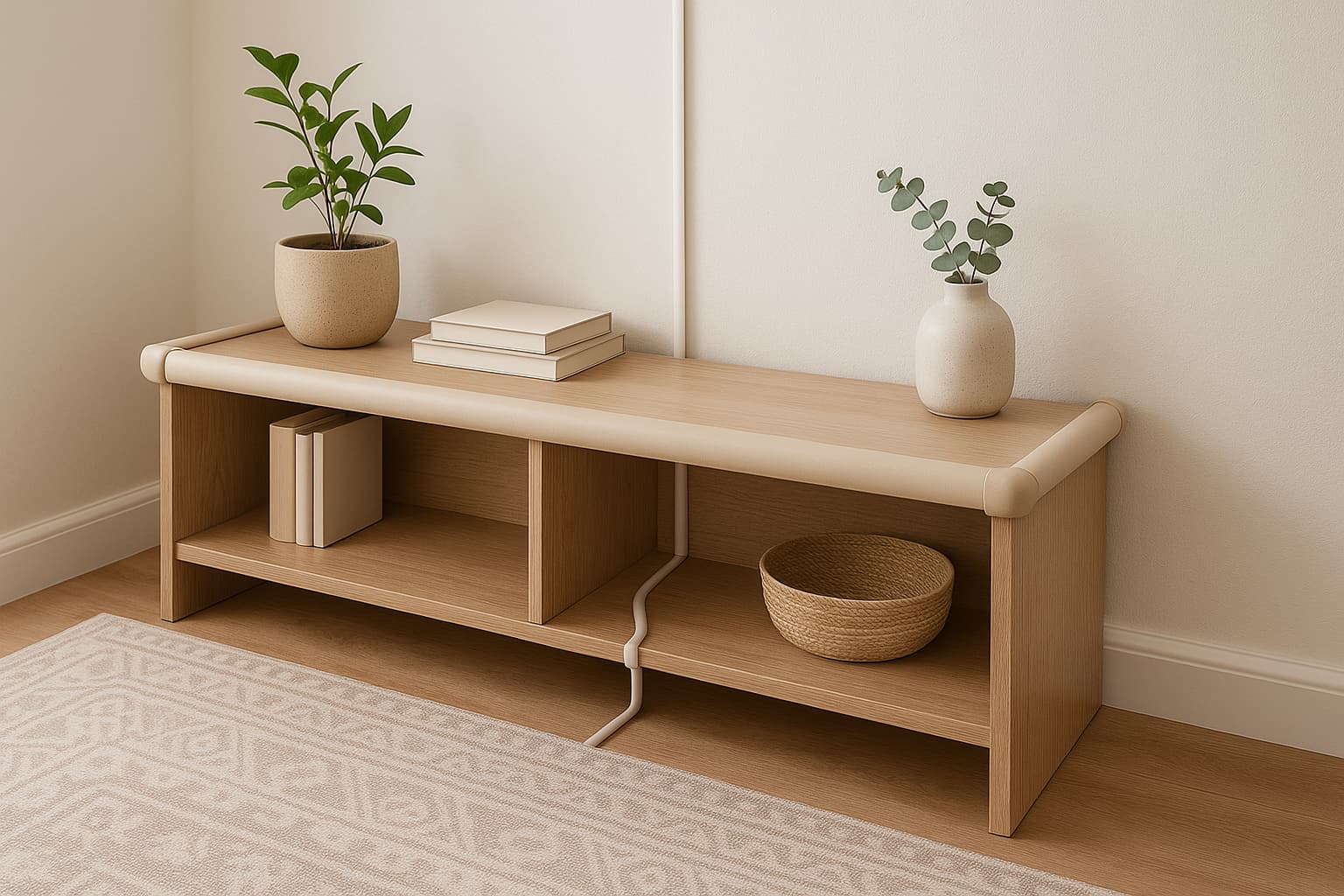
The TV area can be one of the most dangerous spots for young kids.
Heavy screens can tip if pulled, and cords can become strangulation hazards.
You have two main options to secure your TV:
✔ Wall-Mounting – Keeps the TV completely out of reach and stable.
✔ Anti-Tip Straps – Anchor the TV to the wall or furniture to prevent tipping.
Don’t forget cable management. Use cord covers or clips to hide and secure wires.
Whether you wall-mount or strap it down, the goal is to remove climbing temptations and hazards.
📉 Still not sure if your setup is safe? Check 7 Must-Know Facts About Freestanding vs Mounted Furniture Safety for Parents.
🚪 Doorway & Entry Safety in the Living Room
Doorways and entries are high-traffic spots for little explorers.
Without protection, they can wander into unsafe areas or get hurt.
Two simple tools can make a big difference:
✔ Baby Gates – Block entry to stairs, kitchens, or other rooms you don’t want your baby in.
✔ Finger Pinch Guards – Stop doors from closing fully, protecting small fingers from painful slams.
Choose gates with a secure locking mechanism.
For pinch guards, look for soft, durable foam or silicone designs that fit snugly.
Keeping entry points safe helps control where your child can go, and keeps accidents out of the living room.
⚡ Outlet & Electrical Cord Safety Essentials
Electrical outlets and cords are easy for babies to reach, and dangerous if left exposed.
Two main ways to protect outlets:
✔ Outlet Covers – Simple caps that block the holes.
✔ Sliding Outlet Plates – Replace your outlet faceplate with a cover that automatically closes when not in use.
Cords can also be a hazard.
They can pull heavy items down or cause tripping.
Use cord shorteners to keep extra length hidden.
Cord covers can run along the wall or floor to keep them out of sight.
Small changes here go a long way in keeping curious hands safe.
🧸 Safe Storage for Living Room Items
Small items in your living room can be big risks for babies.
Things like remote controls, small toys, or decorative pieces can be choking hazards.
Closed storage helps keep them out of sight and reach.
✔ Storage Bins with Lids – Great for toys and books.
✔ Cabinets with Child Locks – Store remotes, chargers, and decor.
Batteries are especially dangerous.
Keep all devices with batteries in locked storage or high shelves.
A tidy living room isn’t just clean, it’s safer for your baby, too.
🪑 Preventing Furniture Slips & Shifts on Hard Floors
On hard floors, even heavy furniture can slide if pushed or leaned on.
This is risky for babies who pull up or try to climb.
Furniture grippers help keep sofas, coffee tables, and shelves in place.
✔ Rubber Furniture Pads – Stop sliding without scratching floors
✔ Non-Slip Underlays – Perfect for larger pieces like sofas.
✔ Adjustable Grippers – Fit different leg shapes and sizes.
These solutions add grip without drilling or permanent changes.
They’re also budget-friendly and quick to install.
When paired with anchors or straps, furniture grippers give an extra layer of safety.
That means less risk of tipping or shifting and more peace of mind.
🔥 Fireplace & Heater Babyproofing Tips
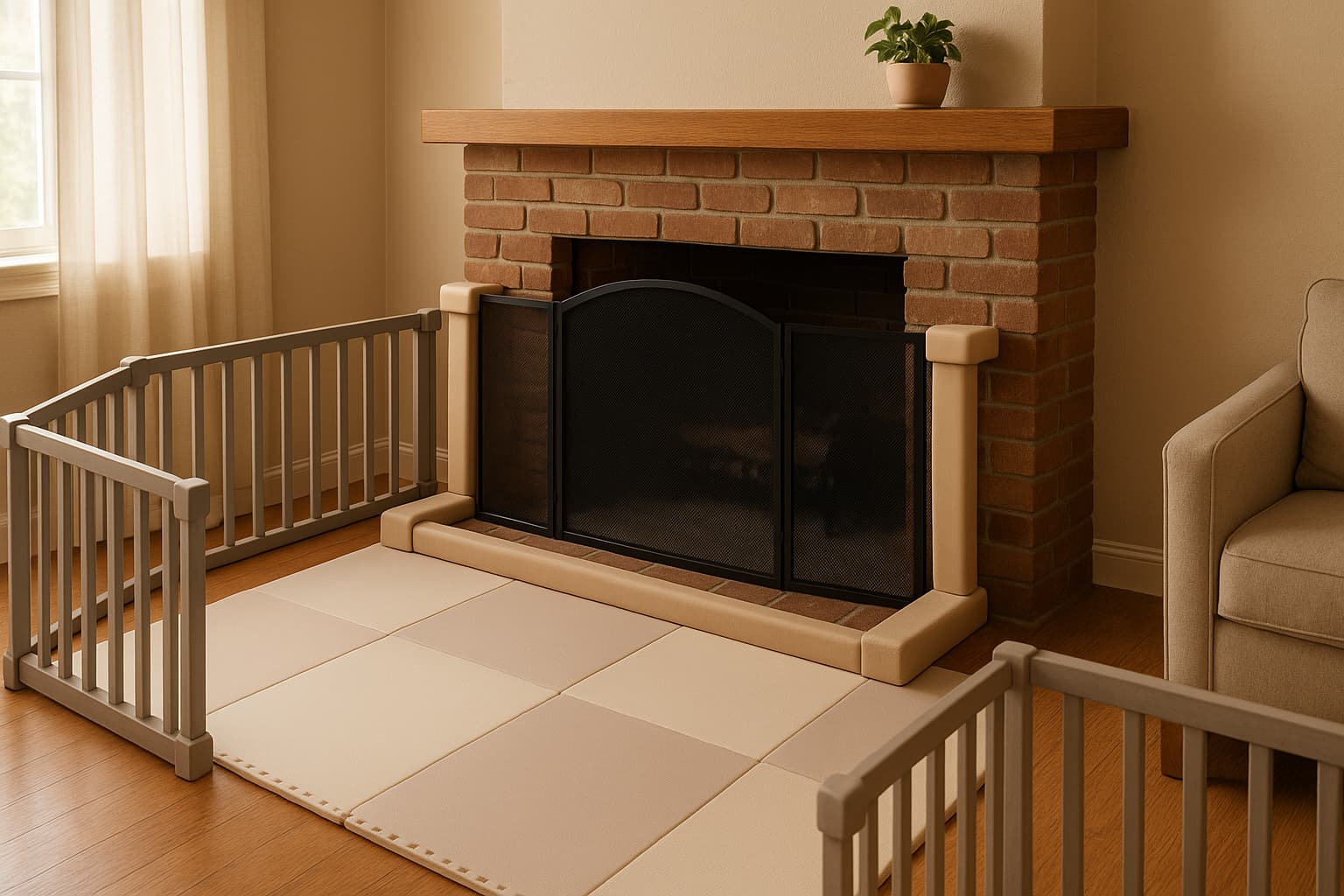
Fireplaces and heaters can be a big danger for curious babies.
Heat, sharp edges, and hard surfaces all pose risks.
Use heat guards to block direct contact with hot surfaces.
A play yard enclosure can create a safe boundary around the area.
✔ Fireplace Screens – Keep sparks and embers contained.
✔ Corner & Edge Padding – Protect against sharp hearth edges
✔ Soft Mats – Cushion falls around the fireplace.
Always check for loose bricks or unstable décor on the mantel.
Keep matches, tools, and lighters locked away.
With the right barriers and padding, your baby can explore safely while you enjoy a cozy fire.
🪑 Need a full home checklist? See Furniture Babyproofing in Apartments vs Houses: What Changes?
📌 Final Checklist: Babyproofing Your Living Room Like a Pro
Babyproofing your living room is not about adding a few gates and calling it done.
It’s about checking every corner, every surface, and every piece of furniture for risk.
Here’s your quick checklist to make sure your space is safe:
🪑 Anchor heavy furniture like dressers, shelves, and TV stands.
🧩 Add corner guards and edge bumpers to sharp surfaces.
📺 Secure your TV with a wall mount or anti-tip straps.
🚪 Use baby gates and finger pinch guards on main doors.
⚡ Cover outlets and hide or shorten cords.
🧸 Store small items like remotes, décor, and batteries out of reach.
🪑 Add furniture grippers to stop sliding on hard floors.
🔥 Guard fireplaces and heaters with heat shields and soft mats.
Taking these steps will give you peace of mind and a safe, happy space where your baby can explore without risk.
Disclaimer:
This article is for informational purposes only and should not replace professional child safety advice. Always follow manufacturer instructions and safety guidelines when babyproofing your home.
Writer’s Byline:
Written by the Baby Safety Insights Team – committed to providing parents with trusted, expert-backed babyproofing guidance.